
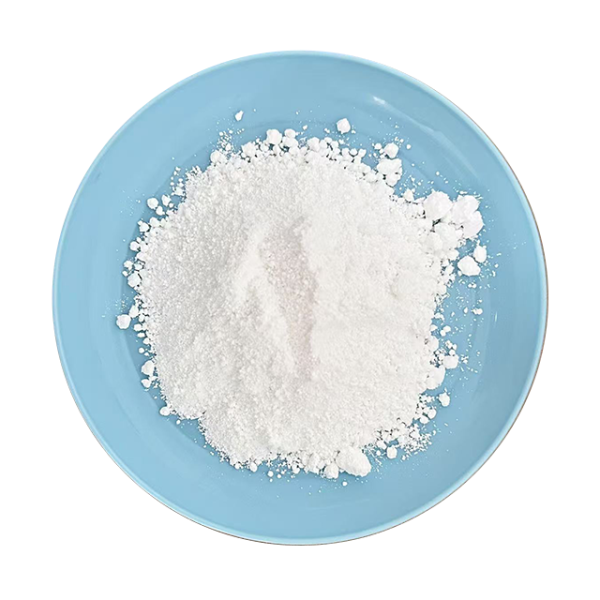
When many people hear “barium sulfate,” their first reaction is: “Isn’t it just ground barite powder?”
Actually, that is not the case.
The material used in high-end sealing rings and high-performance coatings is *precipitated* barium sulfate.
Its purity, particle size, morphology, and surface characteristics can all be engineered and controlled.
In contrast, ordinary barium sulfate—used in drilling muds and standard coatings—does not meet the requirements for high-quality sealing ring formulations.
Therefore, precipitated barium sulfate is the type used in high-end rubber products.
This is because precipitated barium sulfate is not produced simply by grinding; rather, it is “refined” through a series of steps involving chemical reactions, precision washing, classification, and surface treatment.
Its cost is significantly higher than that of bulk fillers like talc or calcium carbonate.
Moreover, it does not make your rubber harder or stronger; in fact, to some extent, it actually “dilutes” the material’s strength.
So, why use it?
Because you are paying not for “strength,” but for “stability” and “purity.”
Three key characteristics of barium sulfate: stability, inertness, and high density.
Stability: Chemically extremely stable. It is insoluble in water, acids, and alkalis. It remains essentially non-reactive even under high temperatures, in corrosive media, or within complex chemical environments.
Inertness: Its surface is highly unreactive—unlike calcium carbonate, which effervesces upon contact with acid. It exhibits virtually no adsorption, chemical reaction, migration, or catalytic activity.
While this is a drawback for ordinary fillers (as it provides no reinforcement), it is a tremendous advantage for high-end sealing rings: it introduces no unintended interfacial reactions and does not act as a source of contamination.
High Density: It has a high specific gravity, meaning it is heavier for a given volume. Consequently, adding even a small amount effectively alters the material’s volumetric filling characteristics; furthermore, the same filling effect can be achieved with fewer particles, thereby reducing the total number of filler-rubber interfaces.
Finer Particle Size Is Not Always Better
Many people assume that the finer the filler, the better.
However, for high-quality seals, micron-sized barium sulfate is actually preferred over nano-sized versions. Why?
If the particles are too fine:
The surface area becomes excessively large, making them prone to adsorbing gas and moisture, which increases the risk of material leaching or precipitation.
They tend to agglomerate, creating new defect sites or points of stress concentration.
Costs are prohibitively high, yet the performance gains do not justify the expense.
A moderate micron-sized range:
Effectively provides inert filling and surface enrichment.
Offers low surface activity, making dispersion easier.
Does not compromise the rubber compound’s processability or final cleanliness.