
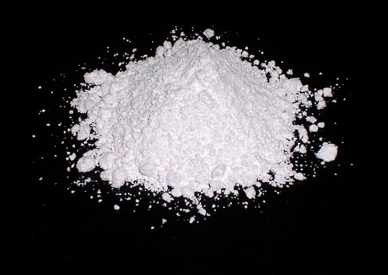
Applications of Barium Sulfate
① Applications in Plastics
In the plastic molding process, filling with barium sulfate can improve the performance of pure resin plastics, such as aging resistance, thermal conductivity, impact strength, optical properties, tensile strength, and elastic modulus, while also reducing product costs.
② Applications in Coatings
Barium sulfate has weather resistance and chemical resistance. Adding it to coatings can improve the leveling, exposure resistance, and impermeability of the coating, and enhance optical properties such as coloring power and opacity. It also strengthens the hardness and wear resistance of the paint film. In recent years, it has been widely used in advanced coatings such as powder coatings and water-based coatings.
③ Papermaking
Barium sulfate fills the gaps between paper fibers, improving the uniformity of the paper sheet, making the paper smoother, and increasing the opacity, whiteness, and stability of the paper. It also replaces some fibers, reducing costs. Nano-BaSO4 composite materials can partially replace TiO2 as an internal filler in pulp, improving the whiteness, opacity, and mechanical properties of the paper to a certain extent; as a coating for paper surface micro-coating, nano-BaSO4 composite coatings can improve the whiteness and surface strength of the paper.
④ Medicine
Due to its non-toxicity and X-ray opacity, BaSO4 is widely used in X-ray shielding materials and contrast agents, further enabling passive or targeted delivery of BaSO4 contrast agents.
⑤ Rubber
Barium sulfate has high density and strong stability, with a particle size generally ranging from 2 to 54 μm. As a filler, it can increase the hardness and strength of products and improve heat resistance and wear resistance. Studies have shown that the application of barium sulfate in airtight rubber layers can also improve their resistance to flexural cracking.
Application of Barium Sulfate in Improving Pigment Dispersibility
Principle of Barium Sulfate in Improving Pigment Dispersibility: Barium sulfate particles have a particle size of approximately 0.7 μm and a narrow particle size distribution, comparable to the primary particle size of many pigments. When an appropriate amount of barium sulfate is added to a pigment dispersion system, as the pigment transforms from secondary to primary particles due to the action of wetting agents, the barium sulfate particles can be evenly distributed and interspersed among the primary pigment particles. This improves the dispersion efficiency of the pigment and allows the pigment particles to diffuse and arrange more uniformly throughout the entire formulation system, thus significantly improving the coloring efficiency of the pigment. This can effectively reduce the amount of pigment used in masterbatches, typically by 5% to 10%.
Barium sulfate carries a certain electrostatic charge and exhibits steric hindrance and electrostatic repulsion, which hinders the flocculation and aggregation of pigment particles. This allows the pigment particles to fully extend during shear dispersion, reducing the chances of flocculation and aggregation, and greatly mitigating the agglomeration of pigment particles.
Principle of Improving the Brightness of Plastic Products: Barium sulfate has strong light reflection capabilities in the ultraviolet and infrared wavelength ranges. Therefore, adding barium sulfate to plastic coloring formulations can result in high brightness in the colored products. The refractive index of barium sulfate is similar to that of common polymers, so it can preserve the vividness and hue of the coloring pigments. Selecting barium sulfate with an appropriate particle size for filling into polymer materials can significantly improve the surface gloss of the processed products.