
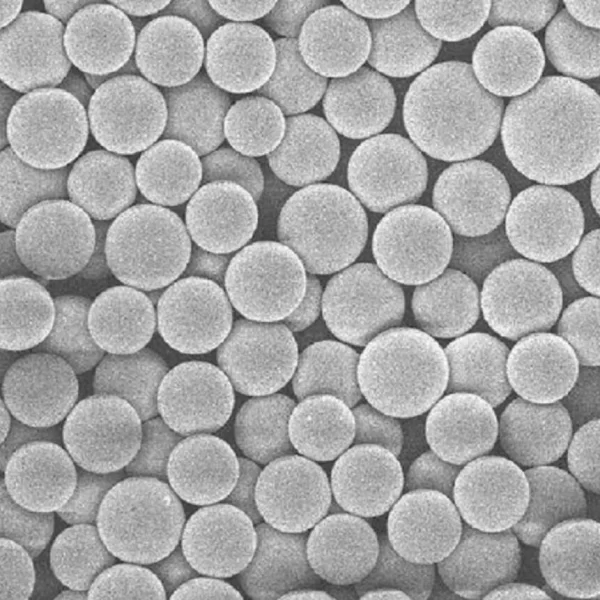
Spherical silica powder refers to a micron-sized powder material processed from natural quartz or synthetic silicon dioxide through specific processes to form spherical or near-spherical particles. Its core characteristics include low specific surface area, high fluidity, and excellent dielectric properties. From a performance perspective, compared to irregular angular silica powder, the spherical morphology of spherical silica powder significantly reduces the viscosity of resin systems, increases the filler loading rate, and possesses a lower coefficient of thermal expansion and good insulation properties, effectively meeting the stringent requirements of high-end electronic packaging materials.
Mainstream preparation techniques for spherical silicon micropowder
Flame Fusion Method: This technique involves feeding crushed quartz powder into a high-temperature flame (temperatures exceeding 1600°C). The powder particles melt at high temperatures and shrink into spherical shapes due to surface tension. This method is mature, has high production capacity, and is currently the core technology for the industrial mass production of spherical silicon micropowder, suitable for the preparation of medium-to-high-end electronic grade products.
Plasma Method: This is a technology that utilizes the high energy of plasma to process materials. In the preparation of spherical silicon micropowder, the silicon micropowder, after ultrafine grinding and chemical purification, is placed in a plasma reactor. The silicon micropowder is rapidly melted in the high-temperature zone of the plasma torch, forming spherical droplets under the action of surface tension, which then solidify into spherical particles after rapid cooling.
Chemical Synthesis Method: Spherical silicon micropowder is prepared through chemical methods such as sol-gel and chemical vapor deposition. Spherical silicon micropowder prepared by chemical methods has high purity and uniform and controllable particle size. However, spherical silicon micropowder obtained by chemical methods such as sol-gel and chemical precipitation is prone to agglomeration. In addition, the raw materials used in chemical methods, especially the commonly used surfactants, are expensive, greatly increasing production costs. Furthermore, there are problems such as difficulty in removing organic impurities, complex process flow, high preparation conditions, and high equipment requirements.
VMC Method (Detonation Method): Because flame-fused spherical silicon is produced by the melting and spheroidization of natural mineral powder, there are certain limitations in terms of purity and particle size distribution. The VMC method uses metal silicon powder to prepare sub-micron spherical silicon dioxide micropowder, which has characteristics such as a smooth surface and high amorphous content.
The sphericity of spherical silicon powder is a core indicator of its quality, and its formation and optimization are constrained by multiple factors. First is the characteristics of the raw materials. The particle size distribution and purity of the raw material powder directly affect the sphericity of the final product. If the raw material contains large particle impurities or powders with a wide range of particle sizes, problems such as particle agglomeration and deformation can easily occur during the melting process, leading to a decrease in sphericity; high-purity quartz raw materials can reduce abnormal phase transitions of impurities at high temperatures, ensuring the integrity of the spherical particles.