
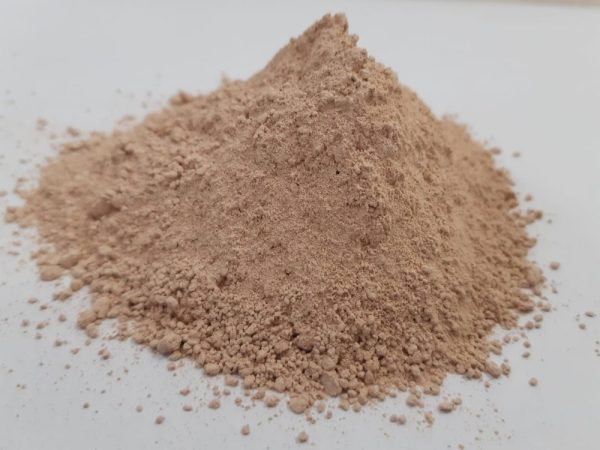
As a natural mineral, zircon sand consists primarily of ZrSiO₄; it serves as a key refractory material as well as the primary source for zirconium-based chemical products and metallic zirconium. Zircon flour, conversely, is a fine powder product derived from zircon sand through various processing stages—such as grinding and classification—utilizing specialized equipment. While its chemical composition remains identical to that of zircon sand, its physical characteristics (specifically particle size and specific surface area) differ, rendering it suitable for a distinct range of applications.
I. Major Industrial Applications
The applications of zircon sand and zircon flour are extensive, driven primarily by four exceptional properties:
1. High melting point (~2550°C)
2. High resistance to chemical corrosion
3. Low coefficient of thermal expansion
4. High strength and hardness
The following outlines their core fields of application:
1. Ceramics Industry (The Largest Consumption Sector)
Application Products: Architectural ceramics (e.g., floor and wall tiles), sanitary ceramics (e.g., toilets, washbasins), daily-use ceramics, and specialized industrial ceramics.
Function: Leveraging its high-temperature stability, it serves as both an opacifier and a whitening agent. When zircon flour is incorporated into ceramic glazes and bodies, it forms a ZrSiO₄/SiO₂ opacifying system during firing. This process generates an opaque white effect that effectively masks the underlying color of the ceramic body, resulting in a finished product that is whiter, smoother, and possesses superior texture. Additionally, it enhances the ceramic’s hardness, abrasion resistance, and chemical corrosion resistance.
Raw Material Form: Zircon flour is predominantly utilized in this sector, as its fine particle size facilitates easier and more uniform dispersion within the glaze matrix.
Common Considerations:
Different grades—classified by particle size and chemical composition—yield varying glaze effects.
Particle size distribution (fineness/coarseness) and volume distribution directly influence the melting temperature and opacifying power.
The presence of oxides—such as iron and titanium—affects the color tone and constitutes a significant factor in any reduction of whiteness.
2. Foundry Industry (Precision Casting)
Application Products: High-end precision castings, such as aircraft engine blades, gas turbine blades, medical instruments, and golf club heads.
Function: The fabrication of casting shells (molds). Due to their exceptionally high refractoriness and excellent chemical inertness, zircon sand and flour are employed as the primary refractory materials for the face coat (the layer in direct contact with the molten metal). They also serve as mineralizers within ceramic core materials. Their application ensures:
High surface finish quality and sharp contour definition for the resulting castings. Resists erosion by high-temperature molten metals (such as stainless steel and superalloys).
Ensures the dimensional accuracy of castings and prevents defects caused by reactions between the casting and the mold shell.
Common Issues:
Zirconium content and the presence of low-melting-point oxides affect refractoriness, while also influencing the surface finish of the casting.
The solid-to-liquid ratio affects slurry pickup, mold shell drying time, and mechanical strength.
Particle size distribution and morphology influence slurry viscosity and the uniformity of slurry coating.
Particle morphology, surface energy, and the presence of iron ions affect the contact angle.
3. Refractory Materials Industry
Application Products: Zircon bricks for glass kilns, metering nozzles for continuous casting, crucibles for the metallurgical industry, etc.
4. Zirconium Chemicals Industry
Application Products: Zirconium dioxide (ZrO₂), zirconium oxychloride (ZrOCl₂), zirconium tetrachloride, zirconium sulfate, zirconium carbonate, etc.
Process: Zircon (ZrSiO₄) contained in zircon sand is decomposed through chemical processes—such as alkali fusion, chlorination, and acidolysis—to produce various zirconium chemicals.
5. Other Applications
Abrasives and Grinding Tools: Due to their high hardness, they are used in the manufacture of cutting and grinding tools; they can also be used to produce zirconium-containing brown fused alumina abrasives.
Glass: Zirconium compounds are added to the glass of older CRT televisions to absorb X-rays; they are also used in high-temperature-resistant, high-strength tableware, as well as in mobile phone and electronic glass.
Zirconium Metal and Alloys: Metallic zirconium is produced through a complex refining process (the Kroll process) and is primarily utilized in the nuclear industry (specifically for fuel rod cladding tubes in nuclear reactors, owing to its high transparency to neutrons and corrosion resistance) and in chemical processing equipment.